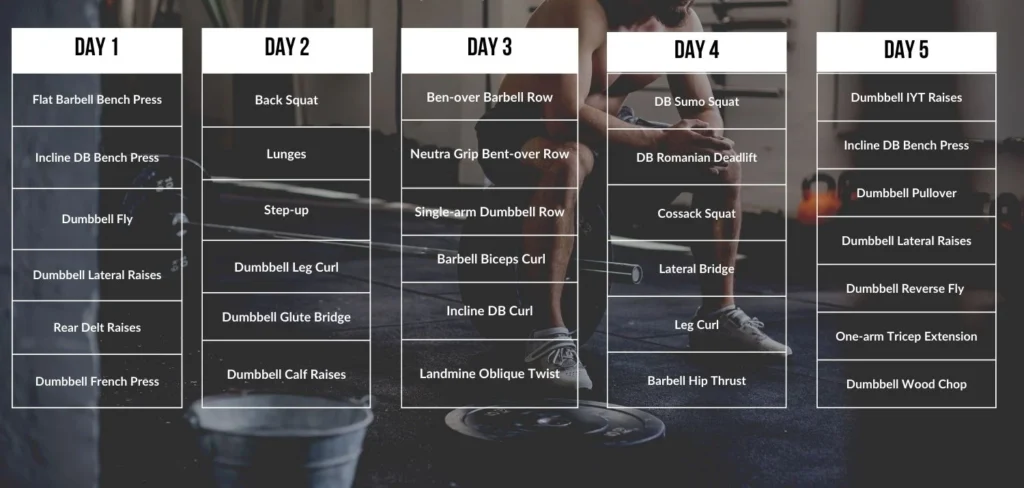
Achieving fitness goals, whether it’s building muscle, losing weight, or improving overall health, requires a well-structured workout plan. A weekly workout routine can maximize results by providing a balanced approach to exercise, ensuring all muscle groups are targeted, and incorporating necessary rest and recovery. This article outlines a comprehensive weekly workout plan designed to help you achieve your fitness objectives effectively.
The Importance of a Weekly Workout Plan
A weekly workout plan provides structure and consistency, which are crucial for progress. It helps prevent overtraining and ensures that you work different muscle groups for balanced development. Additionally, having a plan minimizes the risk of injury and helps track progress, making adjustments as needed. Consistency and variety are key components of a successful fitness regimen, both of which are provided by a well-designed workout plan.
Components of an Effective Weekly Workout Plan
Before diving into the specifics of the workout plan, it’s important to understand its key components:
- Warm-Up: Prepares the body for exercise, reducing the risk of injury.
- Strength Training: Focuses on building muscle and strength through resistance exercises.
- Cardio: Improves cardiovascular health and aids in fat loss.
- Flexibility and Mobility: Enhances movement efficiency and reduces the risk of injury.
- Rest and Recovery: Allows the body to repair and grow stronger.
Weekly Workout Plan
This workout plan is designed to be followed over a week, with each day focusing on different aspects of fitness. Customize the plan according to your skill level and goals, adjusting the intensity and volume as needed.
Day 1: Upper Body Strength
Warm-Up: 5-10 minutes of light cardio (e.g., jogging, jumping jacks) followed by dynamic stretches (e.g., arm circles, shoulder rolls).
Workout:
- Bench Press: 3 sets of 8-12 reps
- Pull-Ups: 3 sets of 8-12 reps (or assisted pull-ups if necessary)
- Overhead Press: 3 sets of 8-12 reps
- Bent-Over Rows: 3 sets of 8-12 reps
- Bicep Curls: 3 sets of 10-15 reps
- Tricep Dips: 3 sets of 10-15 reps
Cool Down: Stretch major upper body muscles including chest, shoulders, and arms.
Day 2: Lower Body and Core
Warm-Up: 5-10 minutes of light cardio followed by dynamic stretches focusing on the lower body (e.g., leg swings, hip circles).
Workout:
- Squats: 3 sets of 8-12 reps
- Deadlifts: 3 sets of 8-12 reps
- Lunges: 3 sets of 10-15 reps per leg
- Calf Raises: 3 sets of 15-20 reps
- Plank: 3 sets of 30-60 seconds
- Russian Twists: 3 sets of 15-20 reps
Cool Down: Stretch major lower body muscles including hamstrings, quadriceps, and calves.
Day 3: Active Recovery
Activity: Engage in low-intensity activities such as walking, yoga, or swimming for 30-45 minutes. This aids in recovery by increasing blood flow and promoting relaxation.
Day 4: Cardio and Core
Warm-Up: 5-10 minutes of light cardio followed by dynamic stretches.
Workout:
- High-Intensity Interval Training (HIIT) Cardio: 20-30 minutes, alternating between high and low intensity (e.g., sprinting and walking).
- Hanging Leg Raises: 3 sets of 10-15 reps
- Side Planks: 3 sets of 30-60 seconds per side
- Bicycle Crunches: 3 sets of 15-20 reps
Cool Down: Stretch major lower and core muscles.
Day 5: Full-Body Strength
Warm-Up: 5-10 minutes of light cardio followed by dynamic stretches.
Workout:
- Deadlifts: 3 sets of 8-12 reps
- Push-Ups: 3 sets of 15-20 reps
- Pull-Ups: 3 sets of 8-12 reps
- Goblet Squats: 3 sets of 10-15 reps
- Plank with Shoulder Taps: 3 sets of 10-15 reps per side
Cool Down: Stretch all major muscle groups.
Day 6: Flexibility and Mobility
Activity: Dedicate this day to improving flexibility and mobility. Engage in a yoga class, practice static stretching, or follow a guided mobility routine for 30-45 minutes.
Day 7: Rest and Recovery
Take a complete rest day to allow your muscles to recover and grow. Focus on hydration, nutrition, and quality sleep to support recovery.
Tips for Success
- Listen to Your Body: Adjust the intensity and volume of exercises based on your body’s feedback. Rest when needed and avoid pushing through pain.
- Nutrition: Fuel your body with a balanced diet rich in protein, healthy fats, and carbohydrates to support your workout routine.
- Stay Hydrated: Drink plenty of water throughout the day to stay hydrated, especially before, during, and after workouts.
- Track Progress: Keep a workout journal to track your progress, noting weights lifted, reps completed, and any changes in performance.
- Consistency is Key: Stick to your workout plan as closely as possible. Consistency is crucial for achieving long-term fitness goals.
Conclusion
A well-rounded weekly workout plan can significantly enhance your fitness journey by providing structure, balance, and a comprehensive approach to exercise. By following this plan, you can maximize results, improve strength and endurance, and achieve your fitness goals more efficiently. Remember to listen to your body, prioritize recovery, and maintain consistency for the best possible outcomes. With dedication and perseverance, you’ll be on your way to a healthier, fitter you.