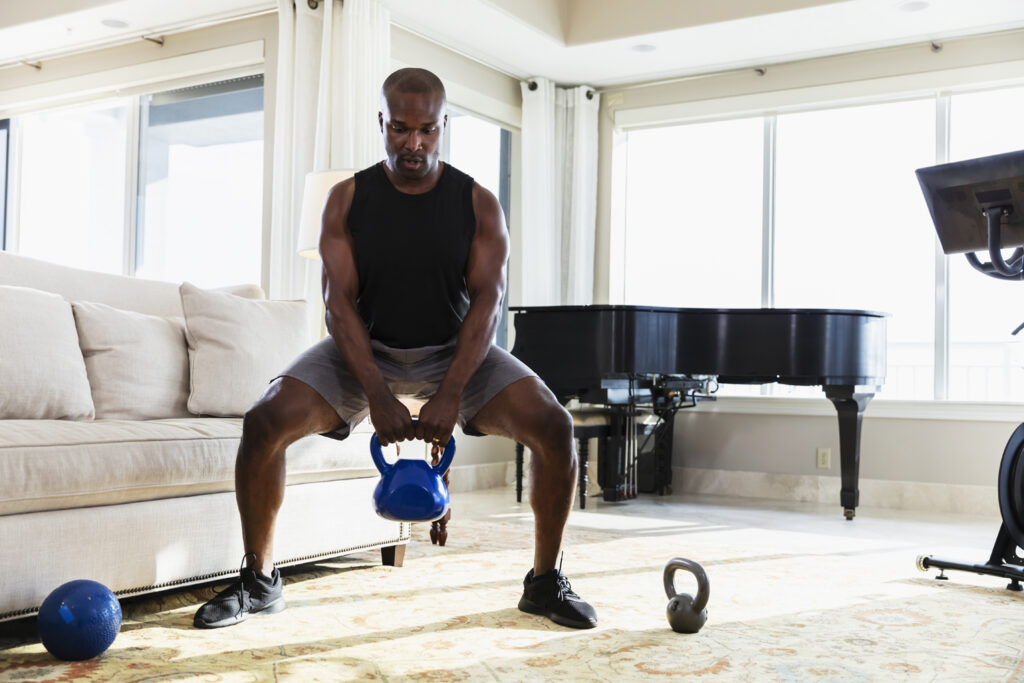
A mid adult African-American man in his 30s exercising with kettlebells at home in the living room. He is an athlete with a muscular build.
In today’s fast-paced world, finding time to hit the gym can be a daunting task. Yet, maintaining a healthy lifestyle remains a top priority for many. This is where effective home workout plans come into play. With the right strategy, you can achieve your fitness goals right from the comfort of your home, without the need for expensive equipment or gym memberships. In this article, we will explore how you can transform your fitness journey with well-structured home workout plans.
The Benefits of Home Workouts
Home workouts offer numerous advantages that can make them an appealing choice for many fitness enthusiasts. Here are some key benefits:
Convenience
One of the biggest advantages of home workouts is the convenience they offer. You can exercise at any time of the day that suits your schedule, without having to commute to a gym. This flexibility can help you maintain a consistent routine, regardless of how busy your life gets.
Cost-Effective
Setting up a home workout routine can be much cheaper than a gym membership. With minimal investment in essential equipment like a yoga mat, resistance bands, or dumbbells, you can create a versatile workout space.
Privacy
Exercising at home allows you to work out in a private environment, free from the self-consciousness that can sometimes accompany gym settings. This comfort can boost your confidence and encourage you to try new exercises.
Customization
Home workouts can be tailored to meet your specific fitness goals, whether you’re looking to lose weight, build muscle, or improve your cardiovascular health. You have the freedom to choose exercises and routines that best suit your needs.
Creating an Effective Home Workout Plan
An effective home workout plan should be comprehensive, balanced, and tailored to your individual fitness level and goals. Here’s how you can create one:
Assess Your Fitness Level
Before starting any workout plan, it’s crucial to assess your current fitness level. This will help you choose exercises that are appropriate for your abilities and avoid injury. Consider factors like your strength, endurance, flexibility, and any pre-existing health conditions.
Set Clear Goals
Define what you want to achieve with your home workout plan. Whether it’s weight loss, muscle gain, or improving your overall fitness, having clear goals will keep you motivated and focused.
Choose the Right Exercises
Select a variety of exercises that target different muscle groups. A balanced workout plan should include:
– Cardiovascular exercises (e.g., jumping jacks, burpees, or running in place) to improve heart health and burn calories.
– Strength training exercises (e.g., squats, lunges, push-ups, and planks) to build muscle and increase metabolism.
– Flexibility and balance exercises (e.g., yoga or Pilates) to enhance flexibility, reduce the risk of injury, and improve overall body function.
Create a Schedule
Consistency is key to seeing results from any workout plan. Create a weekly schedule that outlines which exercises you’ll do on each day. Aim for at least 150 minutes of moderate aerobic activity or 75 minutes of vigorous activity per week, combined with muscle-strengthening activities on two or more days.
Track Your Progress
Keep a record of your workouts to track your progress over time. This can help you stay motivated and make necessary adjustments to your plan. Consider using fitness apps, journals, or spreadsheets to monitor your achievements.
Sample Home Workout Plan
Here’s a sample weekly workout plan that you can use as a starting point. Adjust it based on your fitness level and goals:
Day 1: Cardio and Core
– Jumping jacks: 3 sets of 30 seconds
– Mountain climbers: 3 sets of 30 seconds
– Plank: 3 sets of 30 seconds
– Russian twists: 3 sets of 15 reps per side
Day 2: Upper Body
– Push-ups: 3 sets of 10 reps
– Tricep dips: 3 sets of 10 reps
– Dumbbell rows: 3 sets of 10 reps per side
– Shoulder taps: 3 sets of 15 reps per side
Day 3: Rest or Active Recovery
– Light yoga or stretching routine
– Take a walk or engage in a low-impact activity
Day 4: Lower Body
– Squats: 3 sets of 15 reps
– Lunges: 3 sets of 10 reps per leg
– Glute bridges: 3 sets of 15 reps
– Calf raises: 3 sets of 20 reps
Day 5: Full Body
– Burpees: 3 sets of 10 reps
– Plank to push-up: 3 sets of 10 reps
– Bicycle crunches: 3 sets of 15 reps per side
– Wall sit: 3 sets of 30 seconds
Day 6: Flexibility and Balance
– Yoga or Pilates routine focusing on flexibility and balance
– Deep stretching for all major muscle groups
Day 7: Rest
– Complete rest or engage in a gentle activity like walking
Tips for Staying Motivated
Staying motivated can be challenging, especially when working out at home. Here are some tips to keep you on track:
Create a Dedicated Workout Space
Designate a specific area in your home for workouts. Keep it tidy and equipped with your workout essentials to make exercise sessions more inviting.
Find a Workout Buddy
Partnering with a friend or family member can make workouts more enjoyable and hold you accountable. You can also join online fitness communities for support and encouragement.
Mix It Up
Prevent boredom by varying your workouts. Try new exercises, change your routine every few weeks, or explore different types of workouts like dance, martial arts, or online fitness classes.
Set Realistic Milestones
Break your larger fitness goals into smaller, achievable milestones. Celebrate your successes along the way to maintain motivation.
Conclusion
Transforming your fitness journey with effective home workout plans is both achievable and rewarding. By understanding the benefits, creating a tailored plan, and staying motivated, you can reach your fitness goals without ever leaving your home. Embrace the flexibility and convenience that home workouts offer, and enjoy the journey towards a healthier, stronger you. Remember, consistency is key, and every step you take brings you closer to your fitness aspirations.